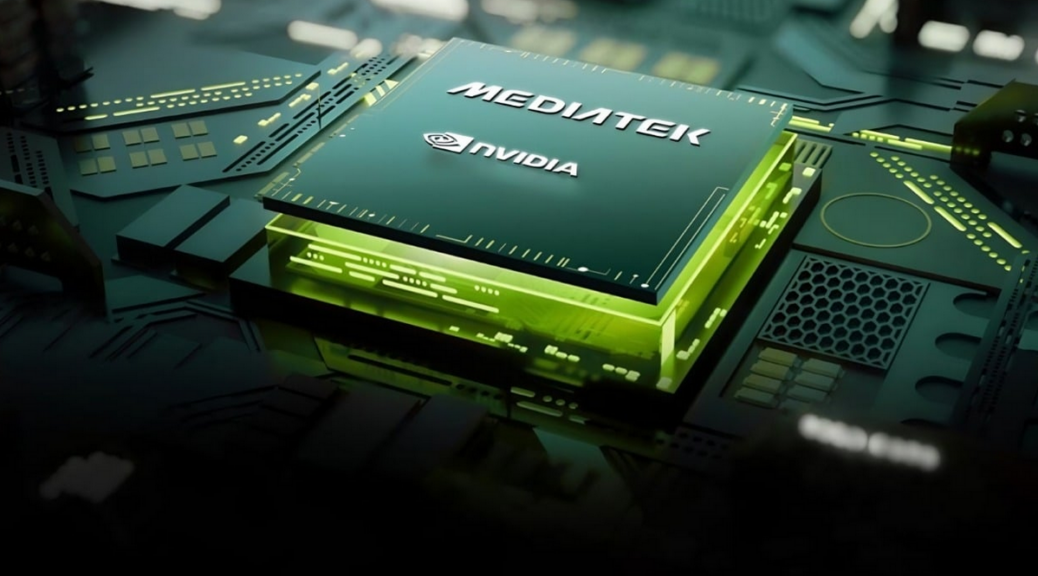
Just a couple of weeks ago, Lenovo sent me the Qualcomm X2-based Yoga Slim 7X Gen 11 laptop. Over the weekend, NVIDIA upped the ante with a Computex announcement of its RTX Spark CPU, also ARM-based. Developer in collaboration with MediaTek, this new CPU family, aka N1 and N1X, shows that NVIDIA extends ARM on Windows’ reach. Indeed Microsoft has announced a “Surface Laptop Ultra” build around this silicon, and ASUS, Dell, HP, Lenovo and MSI are also on the bandwagon. Acer and Gigabyte will follow shortly after that, and we’ll have both laptops and desktops running RTX Spark to choose among. Big news!
What NVIDIA Extends ARM on Windows’ Reach Means
Let me be clear about what’s going on with this upcoming architecture and systems that will use it. It’s aimed squarely at the top end of the market. I’m guessing such systems could easily cost upwards of US$5K, because they are aiming at high-end creators and AI developers.
Here’s a list of noteworthy features that NVIDIA and the OEMs are touting as relevant to potential buyers of such top-flight PCs:
- Up to 6,144‑core Blackwell RTX GPU for high‑performance graphics, AI acceleration, and workstation‑class compute in thin‑and‑light designs.
- 20‑core Arm‑based Grace CPU (co‑developed with MediaTek) delivering strong performance‑per‑watt for mobile and small‑form‑factor desktops.
- Up to 1 petaFLOP FP4 AI compute enabling local execution of large AI models, agentic workflows, and advanced inference without cloud dependency.
- Unified memory architecture (16–128GB LPDDR5X) shared between CPU and GPU, reducing bottlenecks and enabling massive 3D scenes, large‑context LLMs, and high‑resolution media workflows.
- Ultra‑low power envelope (single‑digit watts to ~80W) allowing OEMs to build ultra‑slim laptops with all‑day battery life while retaining workstation‑class performance.
- Full RTX software stack support (CUDA, TensorRT, DLSS 4.5, OptiX, Reflex, G‑SYNC) for creators, developers, and gamers on Windows.
- Native support for on‑device AI agents via NVIDIA OpenShell and Windows 11 optimizations, positioning PCs as proactive “teammates” rather than passive tools.
- High‑bandwidth NVLink‑C2C interconnect (600 GB/s) between CPU and GPU for low‑latency, high‑throughput compute.
- Advanced media engines including 4:2:2 hardware encode/decode, AV1 encoders, and Blackwell‑class video pipelines for 12K editing and pro‑grade content creation.
A LOT to Take In, MORE Left to Understand
Whoa! That’s a lot of capability with a pretty rarified set of target buyers. Given current RAM and storage pricing, and rising costs for PC hardware in general, it’s clearly a small sliver of the market. But it’s got huge potential, and could ultimately redefine how Windows works — for a certain subset of users/consumers.
I think it’s pretty cool. I hope I’ll get a chance to check one out later this year. In the long run, though, what will make the difference is how and when such special capabilities trickle down to garden-variety PC users. I’m intensely curious to watch this unfold, and see how it all plays out. Stay tuned: I’ll keep you posted!

